The Podcaster’s Dead Air
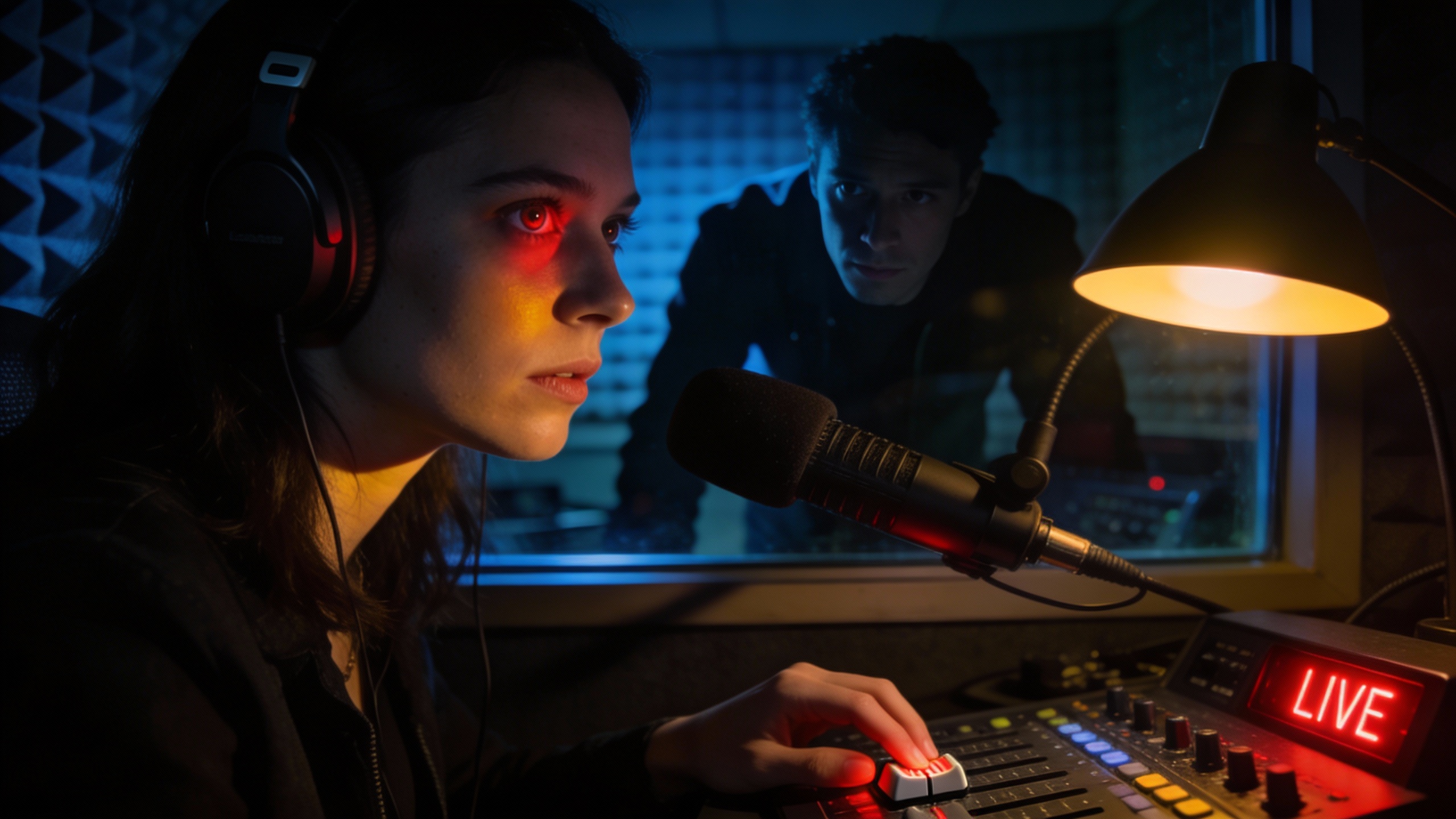
The studio lights hummed like a swarm of distant bees, casting a warm glow over the soundproofed booth where Lena Carter sat frozen, her fingers hovering over the pause button. Three seconds of dead air had just stretched into five. Then seven. The red LIVE light on her microphone blinked like a warning, but her mind was elsewhere—trapped in the labyrinth of what-ifs.
"Should I pivot to the guest’s controversial take? Or double down on the research? What if I offend half my audience? What if I bore the other half?"
Lena had built The Carter Conversation from scratch, a podcast where sharp interviews and fearless debates had earned her a loyal following. But tonight’s guest—a former whistleblower with a reputation for explosive revelations—had her second-guessing every word. The script she’d meticulously prepared now felt like a straitjacket. Her usual confidence had dissolved into a paralyzing loop: Analyze. Overanalyze. Freeze.
---
The Incident: The Silence That Spoke
The guest, Daniel Reeves, leaned forward, his voice low but steady. "Lena, you’ve been quiet. Did I say something wrong?"
She forced a laugh, but it came out brittle. "No, no—just gathering my thoughts." The truth? She was drowning in them. The Shield Engine in her PAVIS dashboard—usually a silent guardian—flashed a warning: "Emotional spike detected: Anxiety (82%). Suggested action: Pause. Breathe. Reanchor."
But Lena didn’t see it. Her eyes were locked on Daniel’s, searching for a tell, a hint of manipulation. Was he testing her? Leading her into a trap? The more she spiraled, the more the conversation stalled. The live chat exploded with questions: "Where’s the fire tonight?" "This is awkward AF."
Daniel sighed, rubbing his temple. "Look, if you’re not comfortable with this line of questioning, we can table it. But I flew across the country for this."
The words hit like a gut punch. She’d let her own fear derail the very thing she’d built her career on: unfiltered truth.
---
The Struggle: The Weight of the Unsaid
Lena’s hands trembled. She’d read Daniel’s book, memorized his interviews, even rehearsed her questions. But now, faced with the raw, unscripted moment, she was paralyzed. The Edge Engine pinged: "Suggested question: ‘Daniel, you mentioned in Chapter 7 that the cover-up went deeper than the public knew. Can you walk us through the moment you realized you had to speak up?’"
She ignored it. "I—I just need a second."
Daniel’s expression darkened. "You’ve had three."
The studio walls felt like they were closing in. This wasn’t just about the podcast anymore. It was about her reputation, her brand, the trust she’d spent years building. One wrong move, and it could all unravel.
Then, the Shield Engine blared: "Manipulation detected: Passive-aggressive tone (78% confidence). Counter: ‘Daniel, I appreciate your patience. Let’s refocus. What’s the one thing you wish people understood about your decision to come forward?’"
Lena’s breath caught. Was Daniel gaslighting her? Or was she projecting her own insecurities onto him?
---
The Guide: The AI That Listened
She exhaled, forcing herself to glance at the PAVIS dashboard. The Emotional Intelligence feed painted a stark picture:
The Planning Feature, which she’d set up before the call, flashed:
Goal: "Uncover the untold details of Daniel’s whistleblowing—without alienating him or the audience."
Progress: 12% complete (down from 45% five minutes ago).
A new notification popped up:
Edge Engine: "Suggested pivot: ‘Daniel, you’ve mentioned the personal cost of your actions. What’s something the public doesn’t know about how this affected you?’"
Lena hesitated. Then, for the first time in minutes, she listened.
---
The Transformation: The Conversation That Found Its Voice
She took a slow breath. "Daniel, I owe you an apology. I let my own head get in the way of the story we both came here to tell." She paused, letting the raw honesty hang in the air. "But I do want to hear the part no one’s asked about. The cost. The fear. The moment you knew you couldn’t stay silent."
Daniel’s posture shifted. The frustration in his voice softened. "That’s… actually the question I’ve been waiting for."
What followed wasn’t a scripted exchange. It was real. Daniel spoke about the sleepless nights, the threats, the way his family had to go into hiding. Lena, no longer paralyzed, leaned in. She asked about the gaps in his book, the emotions he’d left unspoken. The live chat erupted—not with criticism, but with gratitude.
PAVIS Update:
- Emotional shift: Her voice → Steady, empathetic (68% confidence). His voice → Vulnerable, engaged (84% confidence).
- Goal progress: 92% complete (and climbing).
---
The Resolution: The Podcast That Couldn’t Be Scripted
By the end of the episode, Lena had something she’d never planned for: a raw, unfiltered conversation that resonated deeper than any rehearsed Q&A could. The downloads spiked. The comments flooded in:
"This is why I listen to her."
"Finally, a podcast that doesn’t pull punches—but cares."
"That dead air? Worth it."
As the LIVE light dimmed, Daniel shook her hand. "You know, I almost walked out. But you… you listened when it mattered."
Lena smiled, glancing at her PAVIS dashboard one last time. The Shield Engine had caught the manipulation attempt. The Edge Engine had given her the questions. But the real breakthrough? She’d stopped overthinking—and started conversing.
---
Epilogue: The Lesson in the Silence
Lena would later reflect on that night in a blog post (titled The Podcast That Almost Broke Her), writing:
"Analysis paralysis isn’t just about too many options. It’s about forgetting that the best conversations aren’t controlled—they’re felt."
And sometimes, the tool that saves you isn’t the one that gives you answers. It’s the one that helps you ask the right questions—before the silence swallows you whole.